9 hr 30 min
Tokashiki Island Day Escape from Naha
Hassle-free boat trip to Kerama's pristine beaches with transfers, lunch, and optional turtle snorkeling
Reserve
Hand-picked by our editors — only the best 5 experiences from 18 reviewed.
Verified partners for every tour, free cancellation where available, and instant confirmation on every booking.
9 hr 30 min
Hassle-free boat trip to Kerama's pristine beaches with transfers, lunch, and optional turtle snorkeling
Reserve
9 hr
Discover Kerama Blue waters and snorkel with wild sea turtles at Tokashiku Beach's pristine shores
Reserve
7 hr
Full-day cruise exploring pristine coral reefs and searching for wild sea turtles across three stunning snorkel sites
ReservePrices from verified partners. Availability updates in real time at checkout. Free cancellation policies apply where shown.
The landmarks, rooms, and views travelers on this tour remember — all visible on a single visit.
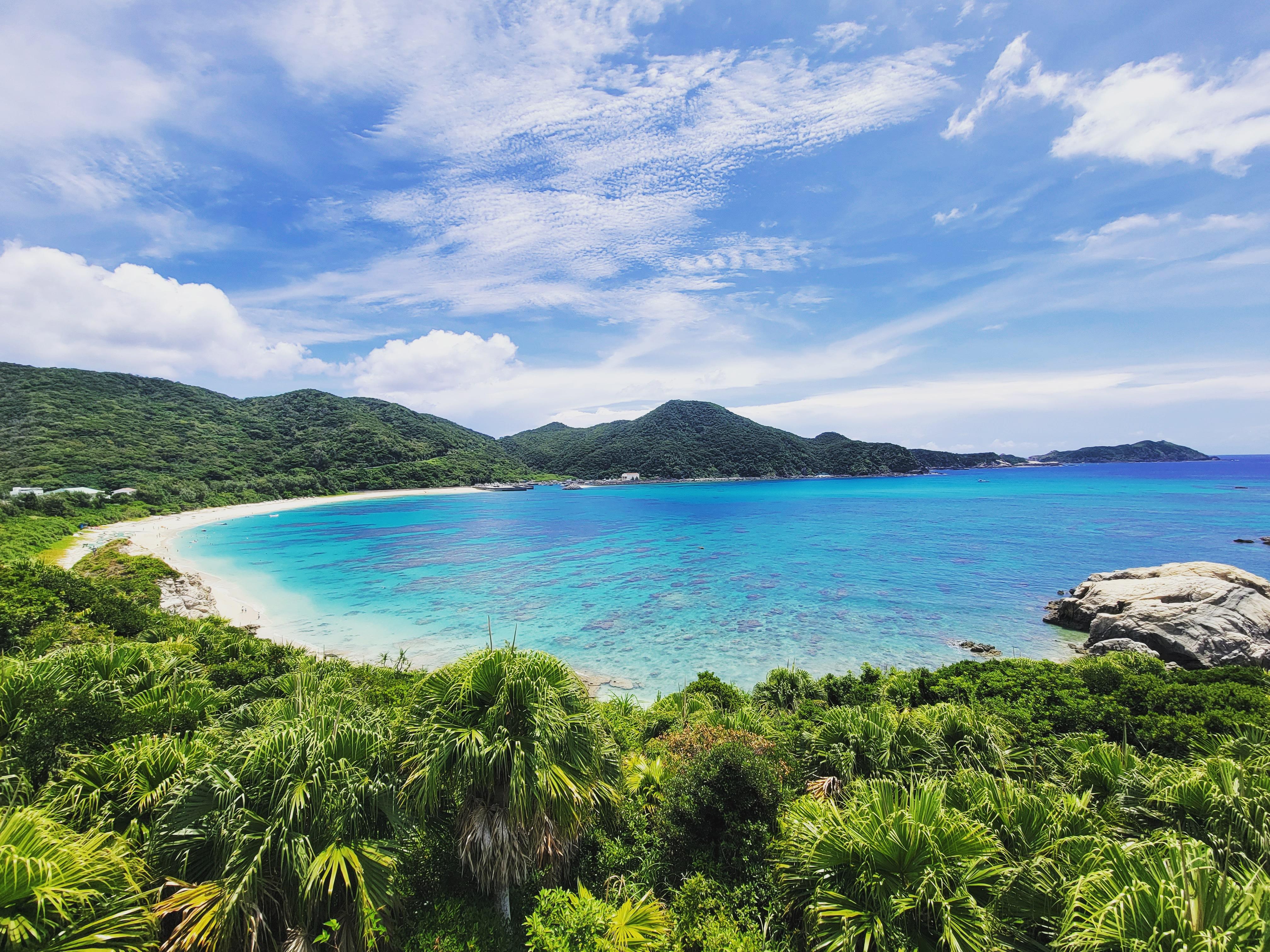
The main white-sand shoreline offering easy access to the water and island facilities.
An uninhabited islet located 800 meters offshore, accessible by boat or kayak for deeper snorkeling.
A viewpoint offering panoramic vistas of the Kerama Islands and surrounding sea.
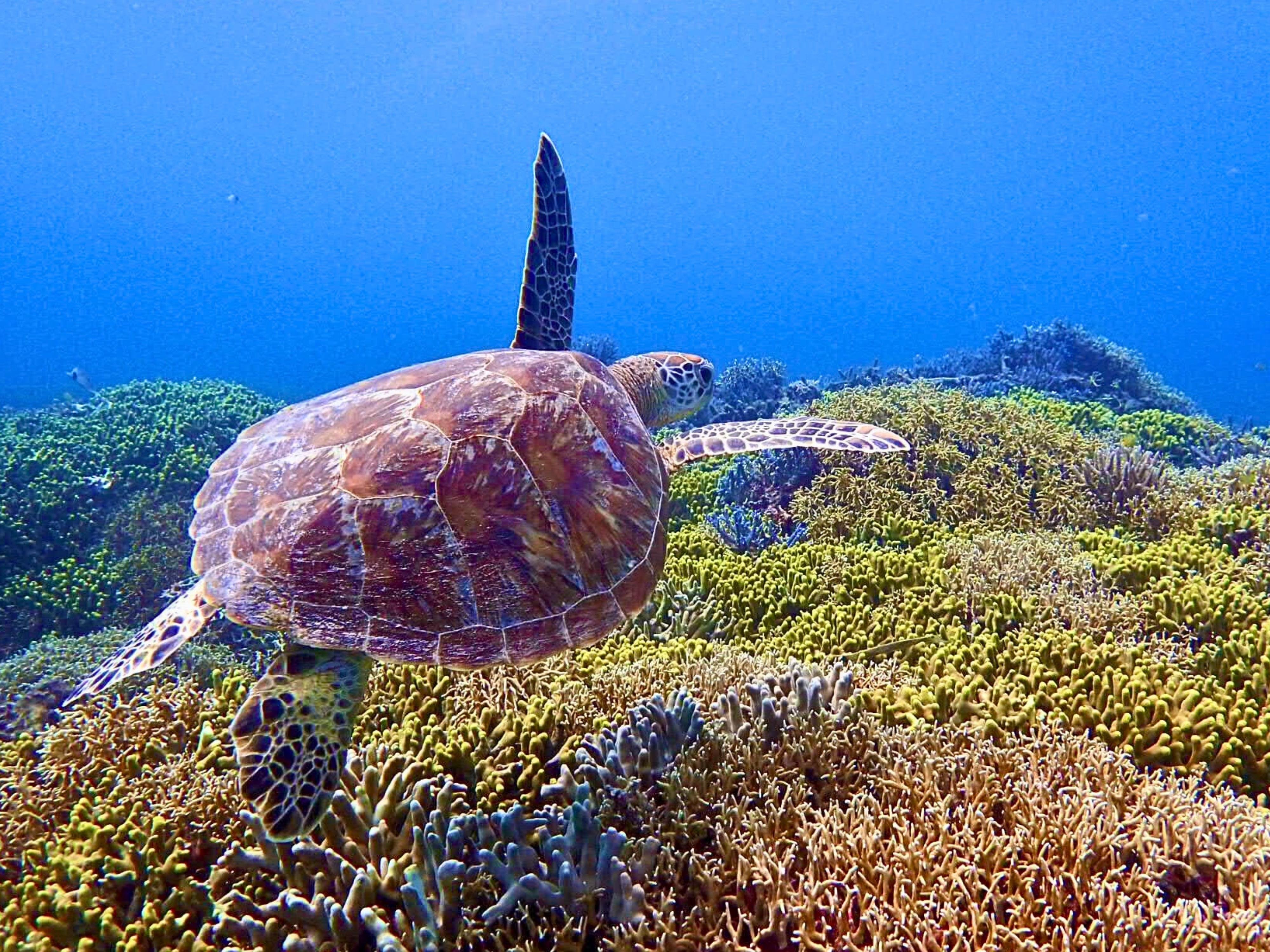
Known for its high frequency of green sea turtle sightings in the shallows.
They complement each other; most visitors who do both call boat excursions the more efficient way to reach remote coral habitats, while Aharen Beach offers superior freedom for independent exploration. Engaging in tokashiki island turtle snorkeling allows you to set your own pace along the shoreline, whereas organized group outings provide guided access to hidden marine corridors.
| Feature | Top pick Aharen Beach Snorkeling | Kerama Boat Tours |
|---|---|---|
Access method |
Direct shore entry | Boat transit required |
Turtle sighting probability |
Moderate (self-guided) | High (guided localization) |
Depth of reef |
Shallow (1-5 meters) | Deep (5-15 meters) |
Flexibility |
Complete freedom | Strict schedule |
Travel logistics |
Independent arrival | Operator-coordinated transport |
Crowd levels |
Moderate to high | Variable based on location |
| See tickets → |
Verdict: Choose tokashiki island turtle snorkeling tours if you prioritize autonomy at zero cost, or opt for a tokashiki island turtle snorkeling tour by boat to maximize encounters in deeper waters, noting that tokashiki island turtle snorkeling tickets are not required for shore access.
Choose your ticket, select your date, and reserve in under two minutes. Secure checkout handled by our verified partner.
Instant confirmation by email, with a mobile voucher you can save offline. No printing, no queuing at a collection desk.
Arrive at the entrance, show your voucher on your phone, and walk in. Most tickets include priority or skip-the-line access.
Practical details for your visit straight from our verified partners — hours, access, rules, and how to get there.
Wear swimwear suitable for active snorkeling. A rash guard is highly recommended to protect against sun exposure while participating in tokashiki island turtle snorkeling.
Lockers are available at beach facilities for personal belongings. Keep valuables to a minimum as there are limited ATM services on the island.
Underwater photography is often included in professional tokashiki island turtle snorkeling tours. Always maintain a respectful distance from marine life when capturing images.
Aharen Beach has sandy terrain which may be challenging for wheelchair users. Snorkeling tours require a basic level of swimming proficiency.
The beach is family-friendly, though snorkeling tours typically have minimum age requirements starting at 6 years old. Supervise children closely near the water's edge.
There are local restaurants near the beach entrance serving lunch. Bringing your own hydration is advised for long days under the sun.
Best time to go, insider tips, nearby landmarks, and the cancellation fine print — flip through to skim what matters to you.
Flexible, no hidden fees.
Cancellations must be made at least 7 days prior to the tour date to qualify for a refund. No refunds are provided for missed sea turtle sightings as these are wild animals.
Tokashiki Island sits 32 kilometers west of Naha, the closest land mass in the Kerama Shoto National Park, designated in 2014 to protect 90 square kilometers of coral reef and the highest density of green sea turtles in subtropical Japan. The island's Aharen Beach and Tokashiku Beach face northwest into the Philippine Sea, where the Kuroshio Current sweeps plankton-rich water across shallow reefs at visibility often exceeding 50 meters—a phenomenon local guides call Kerama Blue. Marine surveys conducted by the Okinawa Churashima Foundation since 2009 have recorded more than 200 individual green turtles, Chelonia mydas, residing year-round in the coastal shallows between three and twelve meters depth, feeding on seagrass beds that regenerate faster in these waters than anywhere else in the Ryukyu archipelago. The island's role as a turtle sanctuary traces to geography and protection. Tokashiki's fringing reefs slope gradually, creating a benthic habitat where turtle grass, Thalassia hemprichii, and paddle weed, Halophila ovalis, form meadows dense enough to support juvenile and sub-adult turtles through their growth years before open-ocean migration. The 2014 national park designation prohibited motorized watercraft within 200 meters of the reef edge and introduced seasonal nesting-beach closures, allowing nesting females to return each June through August. Snorkelers today encounter turtles at depths shallow enough to observe without scuba certification—most sightings occur in the four-to-eight-meter band along Aharen's northern reef wall, where outcrops of Porites coral provide resting ledges between grazing cycles. Tokashiki island turtle snorkeling operates from two access points: self-guided entry at Aharen Beach, a 700-meter crescent of coralline sand with free public access, and guided departures aboard small boats that reach outer reef sites in under ten minutes. Operators based in Aharen village—mostly family-run dive shops established in the 1990s—limit group sizes to eight snorkelers per guide and enforce no-touch protocols aligned with national park regulations. The most reliable turtle zones lie off Aharen's northwest point, locally called Hizushi Rock, and the channel between Tokashiki and the uninhabited islet of Hanari, where current funnels nutrients and turtles congregate in predictable feeding patterns mapped by researchers from the University of the Ryukyus. Visitors reaching Tokashiki depart Naha's Tomari Port aboard either the high-speed Queen Zamami ferry, a 35-minute crossing, or the slower village ferry, which takes 70 minutes and docks at Tokashiki Port on the island's eastern shore. Both ferries run twice daily, with morning departures timed to arrive before midday heat and afternoon returns scheduled to avoid the reef's tidal lows. The island's permanent population stands at fewer than 700 residents, concentrated in Tokashiki village; Aharen, the snorkeling hub, is a ten-minute bus ride southwest. The combination of protected marine status, predictable turtle presence, and logistical simplicity has made Tokashiki the most-visited destination in the Kerama group for single-day marine encounters, drawing 80,000 snorkelers annually—a figure recorded by the Shimajiri District tourism office in 2023 and projected to hold steady through 2026.
"The Kuroshio Current sweeps plankton-rich water across shallow reefs at visibility often exceeding 50 meters."
A step-by-step walkthrough of the visit — what you'll see, how long each stage takes, and the details that matter.
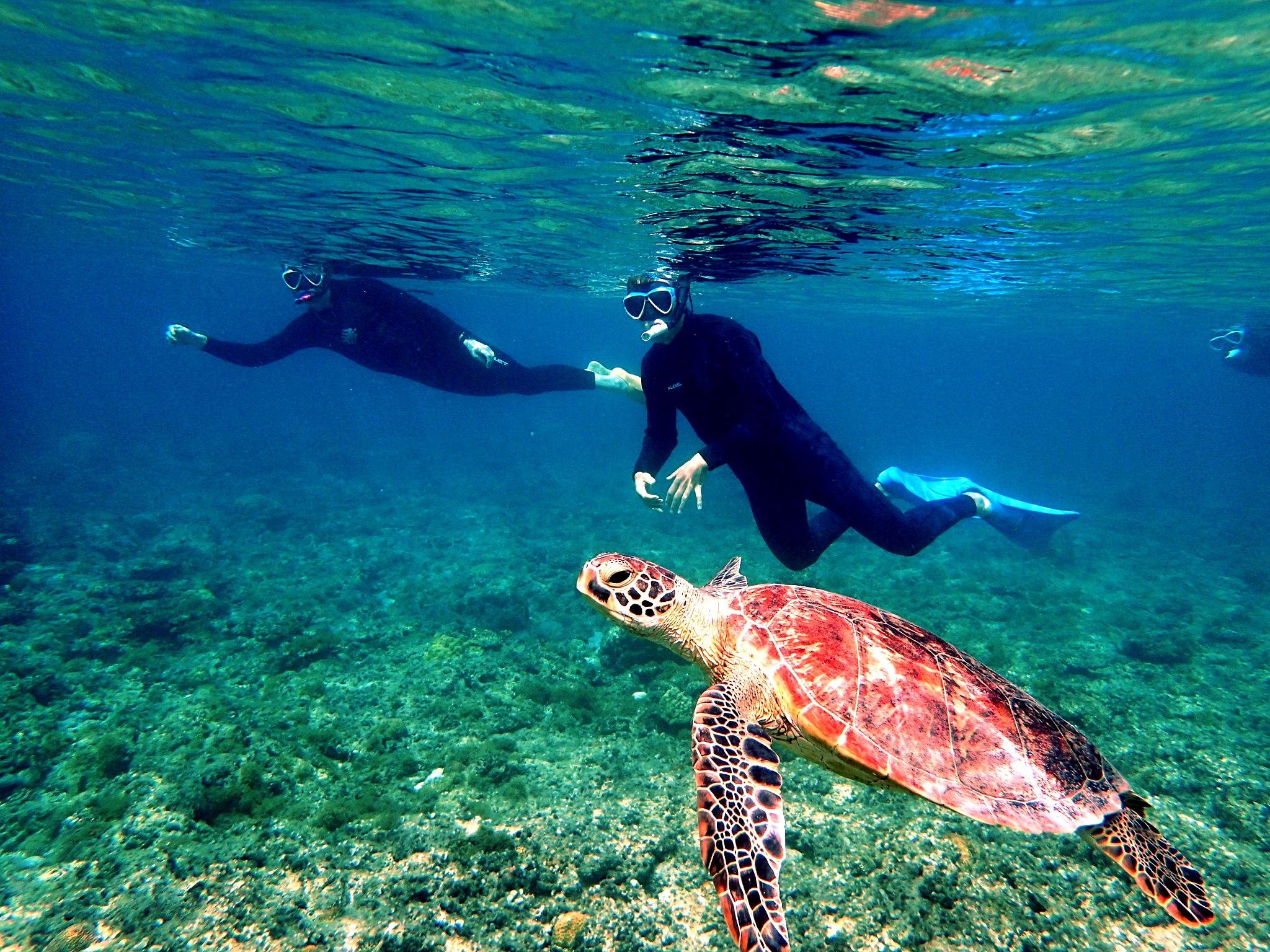
You step off the ferry at Tokashiki Port just after 10:00, the morning light already sharp on the water. A shuttle bus winds through coastal pine and hibiscus to Aharen, where the reef appears as a dark band beyond the beach's powder sand. Your guide fits you with mask and fins at the dive shop, a wooden structure 50 meters from the tide line, and reviews the no-touch rule—turtles tolerate observation but retreat if approached within two meters. You wade into water clear enough to count individual coral heads ten meters out. The reef's edge begins abruptly; one moment you're in waist-deep sand, the next you're floating above a wall of staghorn and table coral descending into blue gradient. Your guide points downward—a green turtle, shell length near 80 centimeters, hovers motionless above a seagrass patch. Its front flippers make slow sculling strokes; you match its drift, keeping distance, watching it pluck ribbon-like blades and chew with unhurried rhythm. A second turtle rises from deeper water, exhales at the surface two meters to your left, and descends again without haste. You follow the guide along the reef's contour, past outcrops where sergeant major fish swarm in vertical clouds and clownfish dart into anemone folds. Another turtle rests on a coral ledge, eyes half-closed, flippers tucked. You float above it for three full minutes before it kicks off and glides toward the channel, trailing a shadow across white sand. By noon you've logged four separate encounters. The ferry back to Naha departs at 15:30; you surface with an hour to spare.
Entrance to Aharen Beach is 0 JPY (Free entry to the public beach).
The beach is open daily from 09:00–18:00.
The best time for tokashiki island turtle snorkeling is during the summer months of June through September when water visibility is high.
Most tokashiki island turtle snorkeling tours provide life jackets and expert guides to assist beginners.
Yes, booking your tokashiki island turtle snorkeling tour online in advance is highly recommended to ensure availability.
We suggest a best arrival window of 09:00–14:00 to avoid crowds and maximize your time.
Wear appropriate swimwear and a rash guard for your tokashiki island turtle snorkeling experience.
Children aged 6 and up can typically participate in these snorkeling activities.
Check with your tour operator, as tokashiki island turtle snorkeling tours are subject to sea conditions and weather-related cancellations.